
Trial Xtreme Freedom
Gameplay GalaxyRacing
4.022.00 Reviews
- Version
- 1.00.0
- Installs
- 1.00M
- Age Rating
- Everyone
Screenshots
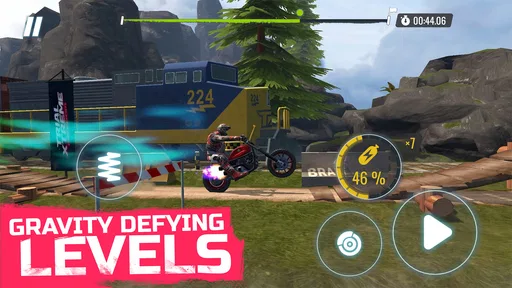
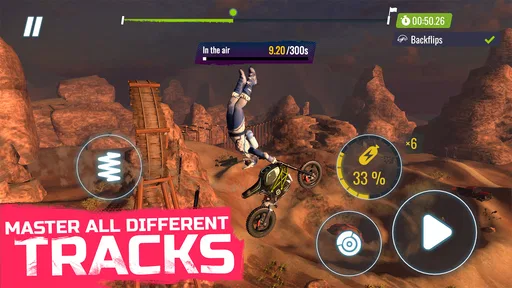
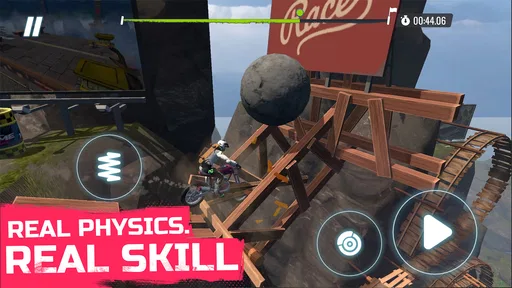
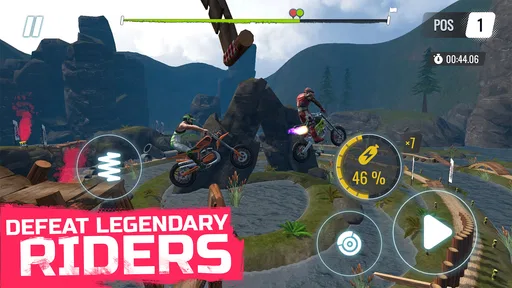
Our Review of Trial Xtreme Freedom
 Analysis by Appyee
Trial Xtreme Freedom is the kind of racing game I open when I want a quick burst of action rather than a long, quiet campaign. It comes from Gameplay Galaxy and focuses on motorcycle-style competition built around speed, stunts, and player-versus-player tension. The appeal is easy to understand: every run asks me to react quickly, keep control through dramatic obstacles, and push for a better result than the rider on the other side.
After spending time with it, I see a game aimed at players who enjoy racing that feels more physical than simply steering around a circuit. The attraction is not only reaching the finish line. It is the pressure of staying balanced, recovering from a mistake, and deciding when a risky move is worth attempting. That gives each session a different rhythm from a conventional arcade racer.
The game is free to install, carries an Everyone age rating, and is listed for devices running Android 7.0 or later. Its current version is 1.00.0. Gameplay Galaxy has already attracted over a million installs, while the average score sits at 4.0 from hundreds of ratings. Those figures suggest a reasonably broad audience, although they do not remove the need to consider whether this particular style of racing suits you.
How the racing feels when speed and control matter
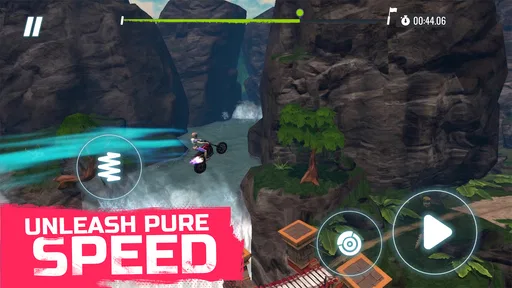
The first thing I noticed is that the sense of speed depends on more than simply moving quickly. A track can feel fast when the game gives me little time to read the next obstacle, but that speed only stays enjoyable if the controls remain understandable. Trial Xtreme Freedom works best when I treat each section as a short sequence of decisions: accelerate, prepare for a jump, correct the bike, then land with enough control to continue.
That makes it different from a typical circuit racer. In a standard racing game, I usually think about racing lines, braking points, and overtaking through corners. Here, my attention is more vertical and immediate. I am watching the shape of the terrain, the timing of a stunt, and the way one imperfect landing affects the next few seconds. The result feels closer to a precision challenge wrapped in a racing format.
I would not recommend approaching every event as a flat-out sprint. The fastest-looking option is often not the quickest route to a clean finish. A jump taken with too much enthusiasm can leave me spending more time recovering than I gained in the air. My most useful habit was to learn the rhythm of a section before chasing an impressive run. Once I knew where the course demanded restraint, speed became easier to use intelligently.
The real speed test is recovery, not maximum acceleration. A rider who stays composed after a poor landing can often outperform someone who takes every obstacle aggressively. That is an important distinction for new players, because the game can appear to reward spectacle while quietly rewarding consistency. I found that controlled momentum created better results than repeatedly forcing the biggest stunt available.
Why the stunt-focused format changes the usual racing routine
Stunts give the races a stronger sense of risk than ordinary road racing. They also create a trade-off that affects how I play. A daring move can make a run feel memorable, but it can also turn a promising attempt into a frustrating restart. Players who enjoy learning through repetition will probably appreciate that tension. Players who prefer predictable laps and clean overtakes may find the same design less comfortable.
One practical approach is to separate practice goals. On an early attempt, I focus on discovering where the course changes pace. On the next, I try to improve landings rather than chase every available stunt. Only after the route feels familiar do I push for a faster time or a more ambitious run. This method makes the game feel less random and gives mistakes a clear purpose.
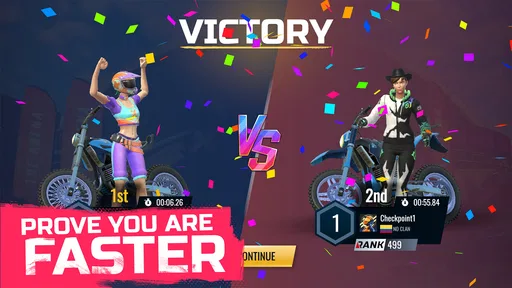
The player-versus-player emphasis adds another layer of pressure. Even when I am concentrating on my own bike, the idea of competing against another rider changes how I judge a mistake. A small delay feels more significant when it affects the final comparison. That competitive framing is useful for short sessions because it gives me a reason to replay a course instead of simply moving on after finishing it once.
At the same time, this is not the ideal choice for someone looking for a relaxed driving game. The combination of stunts, speed, and competition asks for attention. I would choose a calmer kart racer for playing while distracted, or a more simulation-focused title if I wanted realistic road handling. This game sits between those extremes: accessible enough to start quickly, but demanding enough that careless inputs become obvious.
What happens during longer or heavier play sessions
Short sessions are where the design makes the most sense to me. I can play a few races, test a different approach to a difficult section, and stop without feeling that I have committed to a long campaign. That suits everyday moments such as waiting for an appointment or taking a short break between tasks. The competitive structure gives even a brief session a clear objective.
Heavier use changes the experience. Repeating the same obstacle can become tiring when progress depends on small corrections, especially if I keep making the same mistake without changing my approach. The game is more enjoyable when I vary the goal: one run for clean landings, another for speed, and another for experimenting with stunts. Without that change of focus, the repetition can feel more demanding than rewarding.
I also recommend taking a moment to reset after a poor attempt. Racing games built around quick reactions can encourage me to immediately retry, but frustration usually makes my timing worse. A short pause helps me return with a clearer sense of where the run failed. That is a simple habit, yet it matters more here than in a forgiving circuit racer because one bad decision can affect an entire sequence.
For a realistic daily scenario, imagine having ten minutes before leaving home. I would not use that time to chase a perfect result immediately. I would play one run to refresh my timing, identify the most troublesome obstacle, and then make one focused attempt. That approach turns the game into a compact skill exercise rather than an endless loop of hurried restarts.
Longer sessions are better for players who enjoy mastery. The value comes from noticing small improvements: a cleaner approach, a steadier landing, or a recovery that previously seemed impossible. If you need constant new scenery or a broad story to maintain interest, the stunt-racing loop may eventually feel narrow. Its strength is depth within the driving challenge, not variety in every possible direction.
Stability, reliability, and the cost of a failed run
Reliability matters especially in a game where a momentary interruption can spoil a carefully prepared attempt. In my experience, the most important kind of stability is not just whether the game opens. It is whether the controls feel consistent enough that I can trust the same input to produce the same kind of response from one attempt to the next. A precision racer loses much of its appeal if success feels disconnected from timing.
Trial Xtreme Freedom is easiest to judge when I keep my expectations practical. A game centered on high-speed competition naturally creates moments where the screen becomes busy and my attention is divided between terrain, movement, and the rival result. I would avoid treating every visual or physical effect as a signal to accelerate. Clear observation is part of reliable play, and rushing makes the experience feel less stable even when the problem is really my decision-making.
Recovery is one of the most useful parts of the experience. Mistakes do not have to end my interest in a session if I understand what caused them. I learned to classify failures: was my approach too fast, was the bike poorly aligned, or did I commit to a stunt without enough room to recover? That small checklist gives each restart a purpose and prevents the game from becoming a simple cycle of blaming the controls.
There is also a psychological trade-off. Competitive racing makes a clean run satisfying, but it can make ordinary mistakes feel harsher. If I am playing to relax, I need to accept that not every attempt will look impressive. If I am playing to improve, the same failure becomes useful feedback. The game is more reliable as entertainment when I choose that mindset deliberately instead of expecting effortless wins.
The free entry point is helpful for trying the style before committing to it. However, in-app purchases range from $0.99 to $99.99 per item, so I would pay attention during the purchase flow, particularly on a shared device. The wide range means the free download should not automatically be treated as a completely cost-free long-term experience. For me, the sensible approach is to begin without spending and decide later whether any optional purchase genuinely improves the way I play.
Device expectations and practical constraints
The minimum operating-system requirement is Android 7.0, which keeps the game accessible to many older devices. That does not guarantee identical performance across every phone or tablet, though. Hardware age, available storage, background activity, and thermal conditions can all affect how comfortable a fast racing game feels. I would close unnecessary apps before a serious session, especially if the device is already warm or busy.
Resource demands are best judged through actual use rather than assumptions based on the racing label alone. A game with rapid movement and stunts needs the display and controls to remain responsive, but the experience also depends on the device itself. On a newer phone, I would expect the game to be a more natural fit for quick competitive play. On an older device that already struggles with demanding games, I would test a short session before relying on it for longer play.
Screen size affects the experience in a less obvious way. A larger display can make terrain and movement easier to read, while a compact phone may feel more immediate but leave less visual room for judging an upcoming obstacle. I found that holding the device steadily matters because small changes in grip can influence how confidently I react. This is not a game I would play casually while walking or doing another task.
Battery behavior is another practical consideration during heavy use. Racing sessions encourage repeated attempts, and repeated attempts can keep the screen active longer than a quick puzzle round. I would use it near a charger when planning an extended session, particularly on an older phone with reduced battery capacity. That is not a criticism unique to this title, but the competitive loop makes it easy to continue longer than intended.
Players should also consider their connection expectations before choosing it as a main racing game. The focus on PVP competition suggests an experience built around competing with other players, so I would prefer a stable connection whenever the session depends on live competition. If my connection is unreliable, I would avoid starting an important run at that moment. For completely offline play, a traditional single-player racer may be a safer choice.
Who will enjoy it, and who should choose another racer
I think the strongest audience is made up of players who like short, repeatable challenges and do not mind learning through failed attempts. The game suits someone who enjoys seeing a risky jump become consistent after several tries. It also works for competitive players who want a clear reason to replay a course and compare a better run against an earlier one.
It is less suitable for players who want a broad open world, realistic vehicle tuning, or a story-led progression. Those expectations belong more naturally to driving simulations, large arcade racers, or campaign-focused games. Trial Xtreme Freedom is narrower and more focused. Its identity comes from stunt-heavy racing and control under pressure, not from offering every type of driving activity in one package.
I would also hesitate to recommend it to very young children without supervision, even though the content rating is Everyone. The rating describes suitability, while the actual play still involves competition, repeated retries, and optional purchases. A parent may want to review the purchase settings and decide whether the child should play independently or with limits around spending and session length.
Compared with a normal kart racer, this game asks for more attention to balance and recovery. Compared with a motorcycle simulation, it is a more immediate and spectacle-driven choice. Compared with a casual endless runner, it gives the race a stronger competitive structure and a more deliberate sense of learning. Those comparisons explain its position well: it is not trying to replace every racing format, but it offers a distinctive option for players who want stunts to be central rather than decorative.
My performance verdict after weighing speed and stability
Trial Xtreme Freedom is at its best when I treat it as a precision racing game with stunt rewards, not as a button-mashing speed test. The quick sessions, competitive pressure, and dramatic obstacles give it a clear personality. I especially like the way a careful recovery can matter as much as an aggressive start, because that gives skilled play more depth than the first impression suggests.
The limitations are equally clear. Repetition can wear down players who do not enjoy practicing the same sections, and the competitive format is not ideal for distracted play. Device condition and connection quality can also influence how dependable a session feels, while the range of optional purchase prices makes it sensible to keep spending under control. None of those points ruins the game, but they should shape expectations before installing it.
With its free price, Everyone rating, and support for Android 7.0 and later, it is easy to try for players curious about stunt-based racing. I would recommend starting with short sessions, learning the course rhythm before chasing speed, and treating every failed landing as information. If that process sounds satisfying, Gameplay Galaxy’s racer has enough tension to keep improving interesting. If you want calm laps, deep simulation, or a completely hands-off experience, another racing style will probably serve you better.
My final view is positive but specific: this is a good pick for controlled chaos, quick competition, and the satisfaction of turning difficult stunts into repeatable technique. It is not the broadest racing game, and it does not need to be. Its value comes from making every jump, landing, and recovery feel like part of the result. For the right player, that focused challenge is exactly what makes it worth returning to.
Verdict
Strengths of Trial Xtreme Freedom
- Fast-paced motorcycle physics make short sessions exciting.
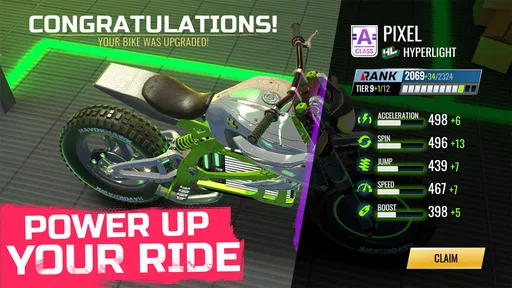
- Wide range of bikes and upgrades encourages continued progression.
- Stunt-focused tracks offer plenty of opportunities to experiment.
- Simple controls are easy to learn on touchscreen devices.
- Offline play is useful when you do not have a stable connection.
Limitations of Trial Xtreme Freedom
- Physics can feel inconsistent during landings and tight obstacle sections.
- Progress may slow noticeably without spending on upgrades or resources.
- Repeated crashes can make difficult levels feel frustrating.
- Visual quality looks dated compared with newer racing games.
- Ads and promotional prompts may interrupt the overall experience.
Similar Picks in This Category
View All
Hill Climb Racing
Fingersoft4.3

Dr. Driving
SUD Inc.4.2

Traffic Rider
skgames4.5

Asphalt 8 - Car Racing Game
Gameloft SE4.6

Race Master 3D: Car Racing
Beresnev Games4.6

Extreme Car Driving Simulator
AxesInMotion Racing4.3
You May Also Like
View All
Frequently Asked Questions
What is Trial Xtreme Freedom?
Trial Xtreme Freedom is a motorcycle trial game focused on balance, precision, and obstacle-based challenges. You control a rider through tracks filled with ramps, jumps, steep slopes, and moving hazards. The goal is not simply to reach the finish line quickly; successful runs require careful acceleration, controlled landings, and good timing. It is designed for players who enjoy physics-based racing and stunt gameplay.
Is Trial Xtreme Freedom free to download and play?
The game can generally be downloaded and played without an initial purchase, although availability and pricing may vary depending on whether you use Android or iOS. Like many mobile racing games, it may include optional in-app purchases for upgrades, customization items, or other advantages. Before downloading, check the store listing for current purchase details and confirm that payment restrictions are enabled if children will be playing.
Does Trial Xtreme Freedom require an internet connection?
Some parts of Trial Xtreme Freedom may be playable offline, particularly basic single-player riding and previously downloaded content. However, an internet connection may be needed for advertisements, online features, account-related functions, updates, events, or purchases. Offline behavior can also change after an update, so players should not assume every mode will remain available without connectivity. Checking the current store description is recommended.
Is Trial Xtreme Freedom suitable for beginners?
Trial Xtreme Freedom is accessible to beginners, but its controls and physics can take time to master. New players may initially struggle with maintaining balance, controlling the bike in midair, and landing without crashing. The difficulty becomes more manageable with practice, especially when riders learn to use gentle throttle adjustments instead of holding the accelerator constantly. Players seeking instant, uncomplicated arcade racing may find the learning curve demanding.
What devices are compatible with Trial Xtreme Freedom?
Compatibility depends on the specific Android or iOS version, device hardware, and the game’s current store requirements. A relatively recent phone or tablet should provide a smoother experience, while older devices may encounter longer loading times, reduced graphics quality, or performance issues. Always review the official Google Play or App Store listing before downloading, including the required operating-system version and available storage space.
Play our best games!


